#iOS27 #iOS26 #AirPods #Apple #AppleIntelligence #iPhone #CongNghe #AI #AirPodsPro #iOS
If AirPods become more customizable than a cheap Android phone, will the future be when the iPhone will only be the "brain" and AirPods will be the user's most important personal device?
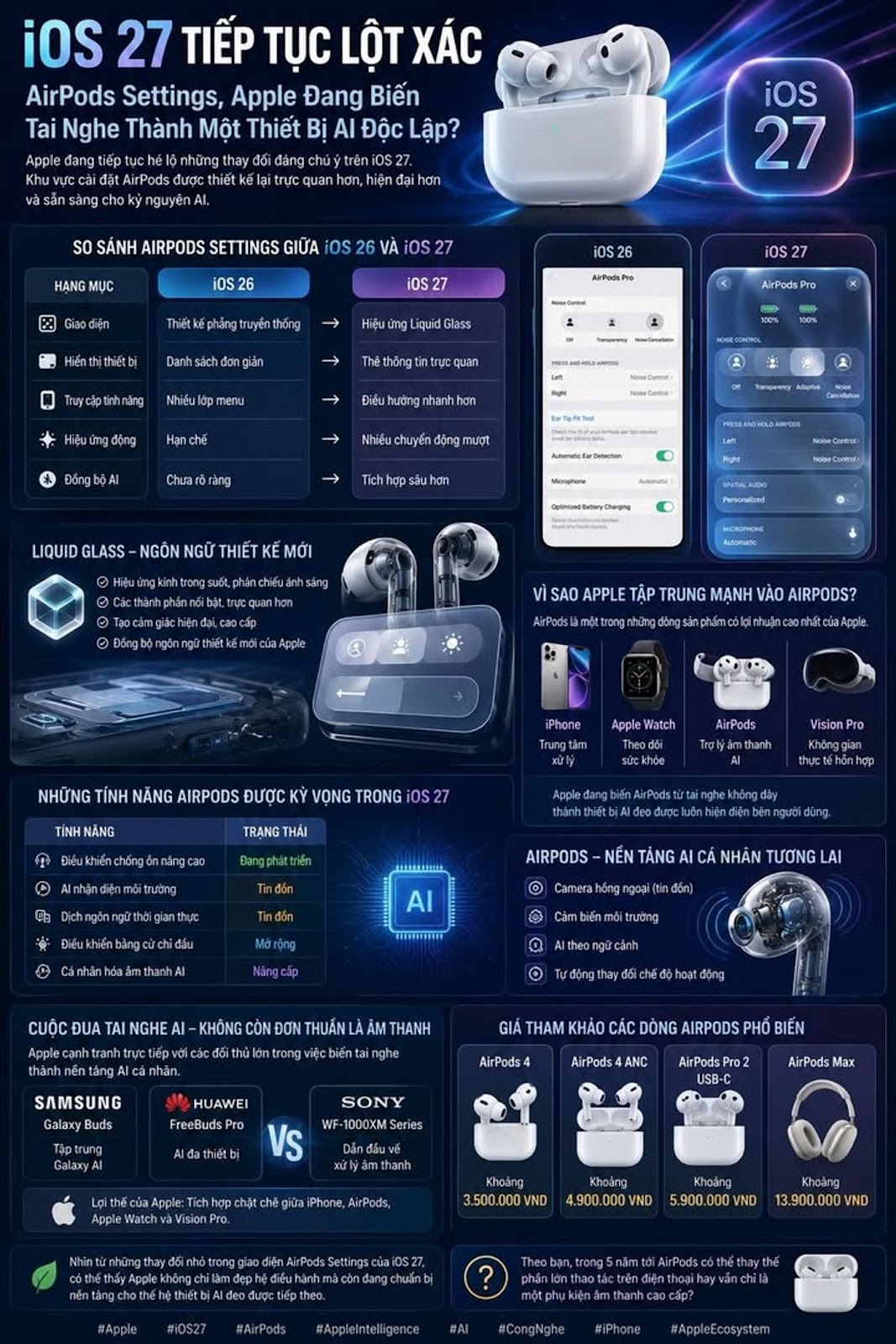
Apple is continuing to reveal notable changes in iOS 27 through a series of photos comparing the interface with iOS 26. After the lock screen and many other system components, the AirPods installation area is becoming the new focus when redesigned to be more intuitive, more modern and ready for the AI era.
Quick comparison of AirPods Settings between iOS 26 and iOS 27
Category iOS 26 iOS 27
Interface Traditional Flat Design Liquid Glass Effect
Device display Simple list Intuitive information card
Access the Multi-menu feature Navigate faster
Limited animations Many smooth movements
AI Sync Not yet clear Deeper integration
The most noticeable change is the new design style with the Liquid Glass language.
Interface elements such as toggle buttons, active noise cancellation bars, spatial audio, and microphone settings are highlighted with a transparent, light-reflective glass effect similar to the style Apple is implementing throughout the operating system.
This helps the AirPods settings no longer look like a dry technical menu but become a hubm control is much more modern.
Why does Apple focus so strongly on AirPods?
According to many analysts, AirPods is currently one of Apple's most profitable product lines.
Product Role in the ecosystem
iPhone Processing Center
Apple Watch Health tracking
AirPods AI audio assistant
Vision Pro Mixed Reality Space
This trend shows that Apple is gradually transforming AirPods from a wireless headset into a wearable AI device that is always present with the user.
It's worth noting that many rumors suggest that future generations of AirPods will be equipped with infrared cameras, environmental sensors, and contextual AI features.
If that becomes a reality, AirPods can understand where the user is, what they are doing and automatically change the operating mode without manual operation.
AirPods features expected in the iOS 27 ecosystem
Status feature
Advanced noise control In development
AI recognizes the environment Rumors
Real-time language translation Rumors
Head gesture control Expand
AI Sound Personalization Upgrade
The current race is no longer simply about wireless headphones.
Apple is competing directly with Samsung Galaxy Buds, Huawei FreeBuds Pro and Sony WF-1000XM Series in turning headphones into personal AI platforms.
While Samsung focuses on Galaxy AI, Huawei develops multi-device AI and Sony leads in audio processing, Apple has a huge advantage thanks to the tight integration between iPhone, AirPods, Apple Watch and Vision Pro.
Reference prices for popular AirPods models today
Product Reference price
AirPods 4 About 3,500,000 VND
AirPods 4 ANC About 4,900,000 VND
AirPods Pro 2 USB-C About 5,900,000 VND
AirPods Max About 13,900,000 VND
Looking from the small changes in the AirPods Settings interface of iOS 27, it can be seen that Apple is not only beautifying the operating system but also preparing the foundation for the next generation of wearable AI devices.
In your opinion, in the next 5 years, can AirPods replace most phone operations or will they still be just a high-end audio accessory?
#Apple #iOS27 #AirPods #AppleIntelligence #AI #CongNghe #iPhone #AirPodsPro #VisionPro #Samsung #Huawei #Sony #TinCongNghe #TechNews #AppleEcosystem