#Nokia #CongNghe #ViecLam #NhanSu #DoanhNghiep #Microsoft #MangVienThong #KinhDoanh #ChuyenDoiSo #GenK
If a company cuts up to 18,000 employees but most of the people who leave still say thank you instead of complaining, is the secret in money or in the way people are treated?
On June 17, 2026, the international technology community continued to recall one of the most special human resource management stories in the history of the technology industry. That's how Nokia handled the mass layoff crisis after its mobile phone segment declined sharply and the sale of its Devices & Services division to Microsoft was completed.
What surprised many business experts was not the number of more than 18,000 affected workers, but the reaction of the employees who had to leave the company.
While many technology corporations have faced a wave of criticism after staff cuts such as Meta, Google, Amazon or HP, Nokia has become an example that many business universities include in crisis management textbooks.
Context of the Crisis
From 2007 to 2013, Nokia continuously lost smartphone market share to Apple and Samsung.
The company's smartphone market share is at its peak
Nokia Over 40%
Samsung About 30%
Apple About 15%
Other brands The rest
As iPhone and Android exploded, Nokia's Symbian operating system gradually fell behind.
In September 2013, Nokia announced the sale of its phone business to Microsoft for about 7.2 billion USD, equivalent to about 188,000 billion VND at the current exchange rate.
After this deal, about 18,000 workers globally are at risk of losing their jobs or having to be restructured.
What Nokia Does Differently
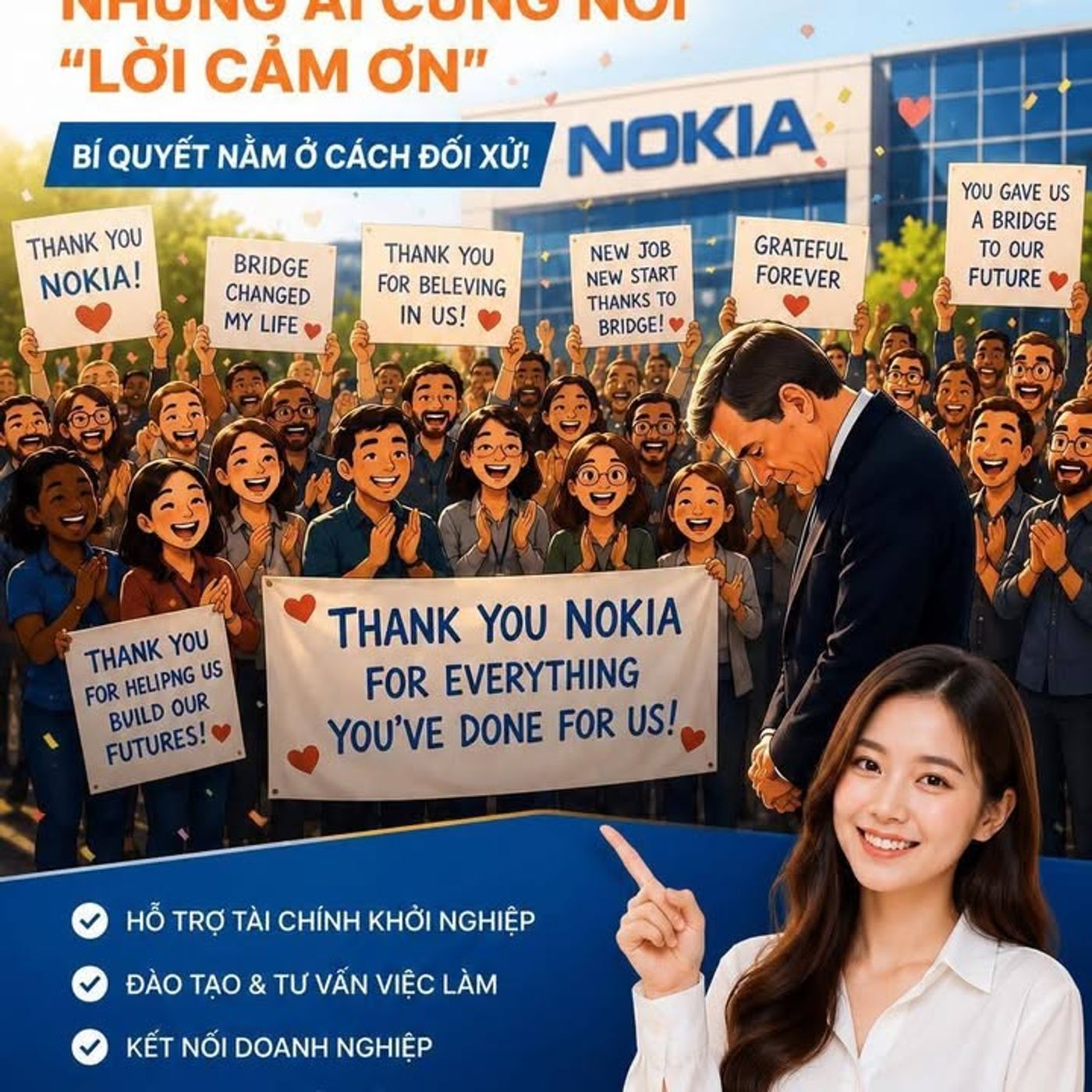
Instead of just awarding a resignation decision and the usual allowance, Nokia's board of directors at that time under CEO Stephen Elop implemented the Bridge program.
Bridge is designed with the goal of helping employees find a new future before leaving the company.
Program included
✅ Financial support for startups
✅ New job training
✅ Job consulting
✅ Connect recruitment businesses
✅ Career change support
✅ Support to establish your own company
According to many international reports, thousands of Nokia employees have found new jobs or built their own successful businesses after leaving the corporation.
Actual Effectiveness of the Bridge Program
Category Results
Affected employees More than 18,000 people
Implementing countries Many European and Asian countries
Forms of start-up support, training, recruitment
Goal Create new jobs instead of just subsidies
Outstanding results Many new startups were established
Some former employees later returned to thank Nokia because they thought the program had helped them change their lives.
Many technology businesses in Finland were later founded by the same employees who left Nokia during the restructuring period.
Comparison with Other Technology Layoffs
Business Scale Cutting Highlights
Nokia 18,000 people Career transition support
Meta HThanks to 21,000 people. Focus on cost optimization
Google About 12,000 people Global downsizing
Amazon More than 27,000 people Restructuring many departments
HP About 6,000 people Optimize operations
The biggest difference is that Nokia invests heavily in the future of its employees after they leave the company.
Lessons for Businesses
Nokia shows a reality worth pondering.
Laying off employees doesn't always open a business up to criticism. The important thing lies in how businesses treat people in the most difficult times.
A stipend can help an employee live for several months.
But a new job or a startup opportunity can be life-changing.
That is also the reason why many years after this historic event, Nokia's Bridge program is still often mentioned as one of the most successful examples of human resources management in crisis.
Has your business ever been so focused on profits that it has forgotten that the most valuable asset is still people?
#Nokia #StephenElop #Microsoft #BridgeProgram #CongNghe #NhanSu #QuanTriDoanhNghiep #Apple #Samsung #Meta #Google #Amazon #KinhDoanh #ViecLam #ChuyenDoiNgheNghiep #PhatTrienBenVung